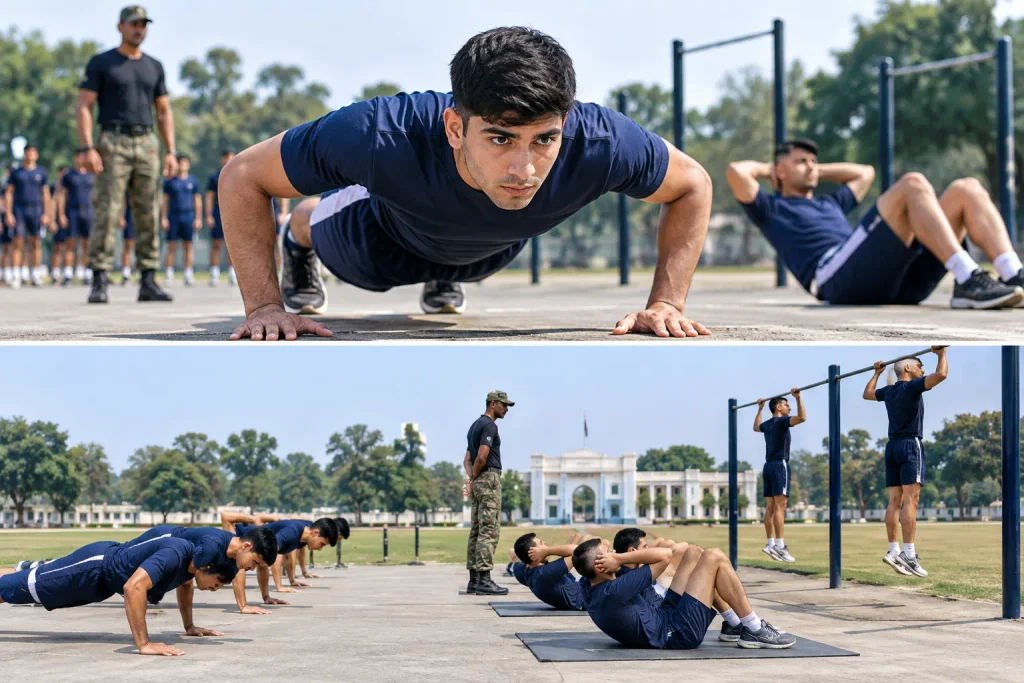
Push-ups, sit-ups and chin-ups have appeared in previous PMA Long Course physical-test instructions. These activities assess different aspects of muscular endurance. The current intake’s exact events, repetitions, time limits and accepted technique must always be confirmed through official recruitment instructions.
Push-up test
Push-ups generally assess upper-body and core control. In a formal assessment, the test staff determine whether a repetition meets the required technique. Candidates should learn the movement from a qualified physical-education teacher or coach rather than relying on rushed repetitions.
Sit-up test
Sit-ups assess trunk and abdominal endurance. Correct technique matters because uncontrolled movement can cause discomfort. Ask a qualified instructor to demonstrate the accepted form if this event is included in your current test.
Chin-up test
Chin-ups assess upper-body pulling strength. The official test may specify grip, range of movement and timing. Confirm these details with the test instructions instead of assuming every institution uses identical rules.
What standards should I follow?
Older recruitment documents and online guides may list figures such as 15 push-ups, 20 sit-ups or 3 chin-ups within a two-minute period. Those figures are historical examples, not a guarantee for the current PMA intake. Use the current advertisement and call letter as the controlling source.
Safe preparation principles
- Learn the correct technique before increasing repetitions.
- Start with a comfortable level and progress gradually.
- Allow rest between strength sessions.
- Do not train through pain, dizziness or unusual discomfort.
- Use supervision if you are unfamiliar with an exercise.
- Maintain balanced nutrition, hydration and sleep.
Test-day checklist
- Check the required reporting time and dress code.
- Know which exercises are included in your batch.
- Listen to the examiner’s demonstration and instructions.
- Ask for clarification before the event begins if a rule is unclear.
- Report an injury or illness honestly.
Frequently asked questions
Are the same repetitions required for every PMA batch?
Not necessarily. Verify the latest standard for your specific intake.
Can I use online videos as the only source?
Videos can help explain general movement, but they cannot replace the official test instructions or qualified supervision.
Are these tests the same as ISSB GTO tasks?
No. Preliminary physical events and ISSB group assessment activities are different parts of the selection process.
Check the official Pakistan Army recruitment portal for current course information.
Continue learning with ExamChamber’s recruitment and preparation guides. Always verify eligibility, dates and assessment standards through official authorities.
Visit ExamChamber
Recent Comments