Understanding TCC Qualification can begin with a broader look at technical education and engineering preparation. For Pakistani students interested in science and technology, the most useful first step is to build a strong academic foundation, understand engineering subjects, and compare education pathways carefully.

The term Technical Cadet Course (TCC) is associated with a technical and engineering-focused study pathway. Programme structures and institutional arrangements can change, so this article focuses on the learning areas behind engineering rather than recruitment, admission or application instructions. For any programme-specific requirements, readers should consult the institution responsible for publishing the current information.
Understanding the engineering-focused study pathway
Engineering education combines scientific principles with practical problem-solving. Students learn how to understand a problem, use evidence, apply mathematics, test possible solutions and communicate their reasoning. These abilities are useful across many fields, including civil engineering, electrical engineering, mechanical systems, computing and telecommunications.
A technical education pathway may include classroom learning, laboratory activities, project work and supervised practical experience. The exact balance depends on the institution and its curriculum. Before choosing any programme, read its published course outline and check what qualification it awards.
Academic subjects that build an engineering foundation
Students in Pakistan commonly encounter the core science and mathematics subjects at school and college level. A confident understanding of these subjects makes later technical learning easier.
| Subject | Why it matters | Useful study habit |
|---|---|---|
| Mathematics | Supports calculations, measurement, algebra, functions and logical modelling. | Practise a range of problems and show each step clearly. |
| Physics | Explains forces, motion, energy, electricity and how physical systems behave. | Connect equations with diagrams, units and real examples. |
| Chemistry | Introduces materials, reactions and properties that are relevant to several technical fields. | Understand concepts before memorising definitions. |
| English | Helps students read technical material, write reports and explain ideas precisely. | Read short explanations and summarise them in your own words. |
| Computer studies | Builds familiarity with digital tools, data, logic and introductory programming. | Practise problem-solving with small, age-appropriate exercises. |
Start Subject-Wise Practice on ExamChamber
Strengthen your engineering foundation with subject-wise MCQs and practice resources. Choose a subject to open its ExamChamber preparation page.
How to prepare for technical subjects
Good preparation is based on regular learning rather than last-minute memorisation. Begin by identifying topics that are difficult, revisiting the relevant textbook explanations and solving practice questions that match the level being studied.
Use a realistic weekly study routine
- Set short study goals for Mathematics and Physics, with time for reviewing mistakes.
- Keep a notebook of important definitions, formulas, diagrams and concepts.
- Use worked examples to understand the method, then solve similar questions independently.
- Review Chemistry concepts in small sections and connect them to practical examples.
- Include reading and writing practice so technical ideas can be explained clearly.
Learn by understanding, not memorising alone
Memorising a formula without knowing when to use it can make unfamiliar questions difficult. For each topic, ask what the concept describes, which units are involved, what assumptions are being made and how the answer can be checked. Drawing a diagram or explaining a solution aloud can reveal gaps in understanding.
Explore engineering fields before choosing a direction
Engineering is not one single subject. Different disciplines solve different kinds of problems, and students can explore them before deciding which area interests them most.
- Civil engineering: focuses on infrastructure, structures, transport systems and water resources.
- Electrical engineering: explores circuits, power systems, electronics and control.
- Mechanical engineering: studies machines, materials, energy and mechanical design.
- Software and computing: involves programming, algorithms, databases and digital systems.
- Telecommunications: looks at communication networks, signals and connected technologies.
These brief descriptions are starting points, not a substitute for a university prospectus or an accredited curriculum. Compare course modules, practical facilities and the type of qualification offered before making an education decision.
Compare education options carefully
Students who enjoy science and technology can explore several educational routes. Depending on their interests and circumstances, these may include a university engineering degree, a computer science or information technology programme, a technical diploma, or introductory STEM courses. Each route has different learning outcomes and progression options.
When comparing options, check the institution’s recognition status, curriculum, teaching facilities, practical learning opportunities, total costs and published progression pathways. Ask a teacher or academic adviser to help explain unfamiliar terms. Avoid relying on screenshots, social-media posts or old summaries when an institution has published updated information.
Useful learning resources for Pakistani students
Start with your current Mathematics, Physics and Chemistry textbooks, class notes and teacher-recommended exercises. For additional explanations and practice, Khan Academy offers free learning material in mathematics and science. Use online lessons to strengthen classroom learning, not as a replacement for your prescribed syllabus.
You can also explore the general learning resources available on ExamChamber. Choose material that matches your current class and subject, and check that any practice resource is relevant to what you are studying.
Frequently asked questions
What does TCC mean in an engineering education context?
TCC is commonly used as an abbreviation for Technical Cadet Course. The exact meaning, structure and academic award should always be confirmed from the responsible institution’s current programme information.
Which subjects are useful for studying engineering?
Mathematics and Physics are central foundations for many engineering disciplines. Chemistry, English and computer studies can also support technical learning, depending on the chosen field and curriculum.
Do all engineering programmes have the same course structure?
No. Course content, practical work, duration and qualifications vary between institutions and disciplines. Read the latest official curriculum instead of assuming that every programme follows the same structure.
Can students explore engineering before selecting a degree?
Yes. Introductory STEM lessons, school projects, science clubs and beginner computing activities can help students discover which subjects they enjoy and where they would like to develop further.
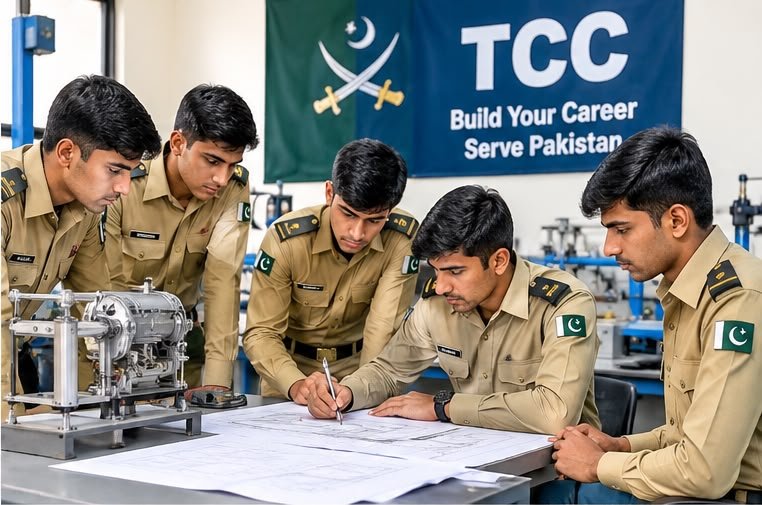
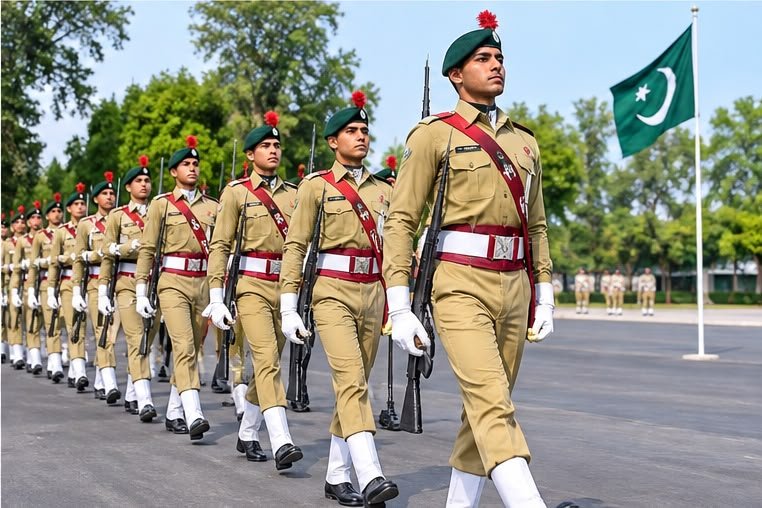
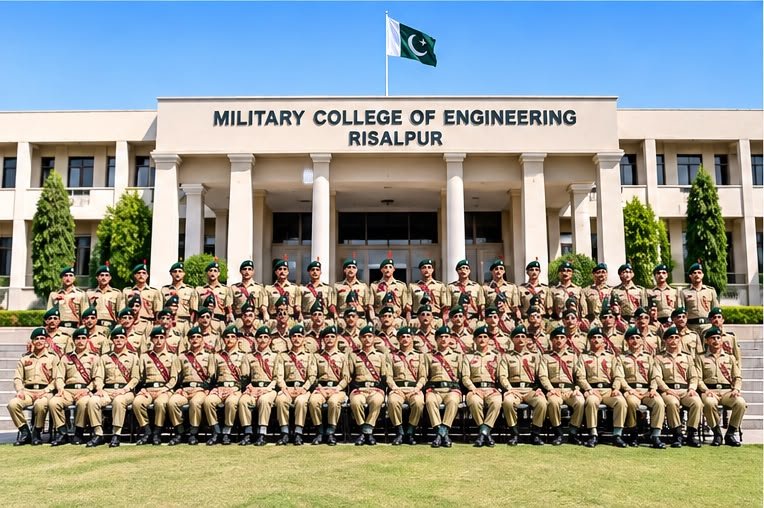
Image note: The four visuals in this article are AI-generated illustrations. They are not verified photographs of actual Pakistan Army Technical Cadet Course students, official ceremonies or institutional facilities.
Conclusion
Engineering study rewards curiosity, careful reasoning and consistent practice. A strong foundation in Mathematics and science, clear communication skills and an understanding of different technical fields can help Pakistani students make informed education choices. Compare programmes through current institutional information, focus on learning outcomes, and choose a path that fits your interests and long-term academic goals.

Recent Comments