Understand the ISSB
Selection Journey
A practical guide to the selection stages, psychological assessment, GTO activities, interview preparation and candidate readiness.
Prepare with confidence • Stay genuineThe PMA Long Course ISSB stage is a major part of the journey for candidates seeking a commission as officers in the Pakistan Army. It is not simply a written examination: the Inter Services Selection Board assesses a candidate’s personality, communication, teamwork, judgement and potential to lead. Understanding the process helps you prepare calmly and avoid common mistakes.

01 What Is ISSB?
ISSB is the selection institution responsible for assessing candidates for commissioning in the Pakistan Army, Pakistan Navy and Pakistan Air Force. The board brings together psychologists, Group Testing Officers (GTOs) and Deputy Presidents to assess candidates through a range of individual and group activities.
The purpose is to form an overall picture of a candidate’s suitability and leadership potential. One strong answer or one difficult activity does not, by itself, represent the whole assessment.
What the Board Looks At
- Communication and listening skills
- Confidence and self-awareness
- Teamwork and cooperation
- Initiative and practical judgement
- Academic ability and general awareness
- Responsibility and leadership potential
ISSB Assessment Centres
The official ISSB website lists centres at:
- Kohat
- Gujranwala
- Malir, Karachi
- Quetta
Your call letter identifies the centre and reporting instructions for your selection.
02 How the ISSB Selection Process Works
The official programme is a four-day assessment process. Arrival and reporting arrangements may be separate, and the order of activities can vary. The overview below explains the main assessment areas without presenting an unofficial fixed timetable.
| Assessment area | What candidates may encounter | Main focus |
|---|---|---|
| Opening and instructions | Reporting, document checks, briefings and activities listed in the call letter | Readiness and following instructions |
| Psychological assessment | Written exercises designed to understand responses, thinking and personality | Self-awareness, judgement and consistency |
| GTO activities | Group discussions, planning exercises and outdoor tasks may be included | Cooperation, initiative and practical leadership |
| Interview and conference | Individual interview and the board’s overall review | Motivation, communication and overall suitability |
This is a general preparation overview, not a guaranteed daily schedule or a complete list of every activity.
03 ISSB Screening Test and Initial Selection
Candidates sometimes use the term “screening” for different stages. The preliminary intelligence and academic tests at an Army Selection and Recruitment Centre are part of the recruitment process before ISSB. They should not be confused with activities conducted after a candidate reports to the board.
Build your verbal and non-verbal reasoning through regular practice. Work on patterns, sequences, analogies, basic arithmetic and careful reading. Practise with time limits, then review mistakes so that you understand the reasoning behind each answer.
04 Understanding the Psychological Assessment
Psychological exercises help assessors understand how candidates think and respond. Depending on the programme, written formats may include word association, sentence completion, picture-based stories or situation responses.
Respond naturally, clearly and honestly. Use practical answers that reflect responsibility and balanced judgement. Keep your responses consistent with what you would genuinely say in an interview or demonstrate during a group activity.

05 GTO Tasks: Teamwork and Leadership
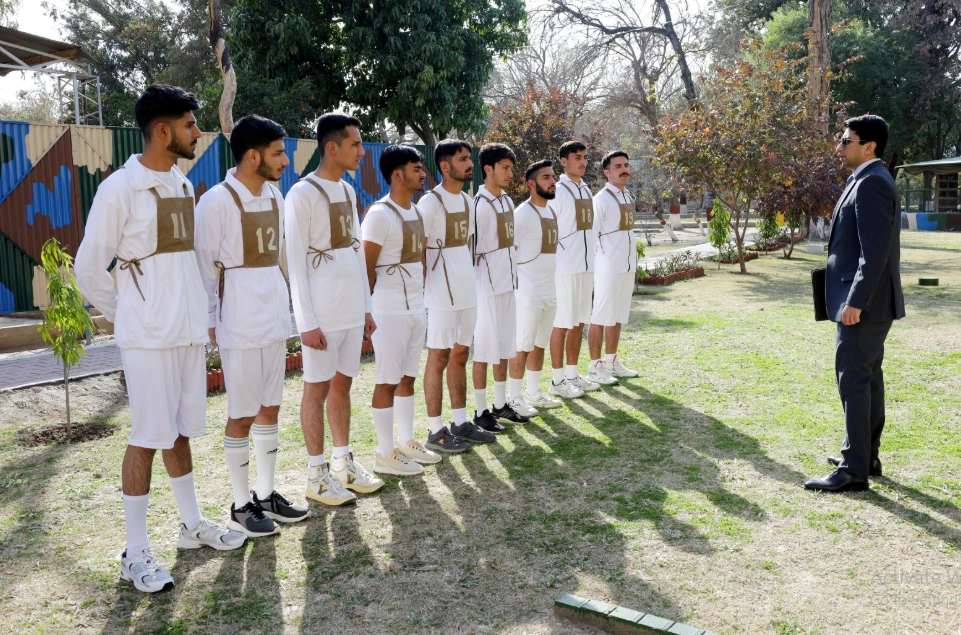
Group Testing Officer activities allow assessors to observe how candidates behave when solving problems with others. Depending on the programme, activities may include group discussion, a group planning exercise, outdoor group tasks, individual obstacles or a command task.

How to Contribute Positively
- Listen carefully before suggesting a solution.
- Explain your ideas in a clear and respectful way.
- Encourage other members to take part.
- Stay cooperative if the group chooses another idea.
- Focus on safety and the task instructions.
- Show initiative without trying to dominate.
You do not need to dominate every discussion to demonstrate leadership. A useful contribution is one that helps the group understand the problem and move towards a workable solution.
06 ISSB Interview Questions and Preparation
The interview may cover your family and education, interests, achievements, strengths, areas for improvement, current affairs and reasons for choosing military service. Prepare ideas rather than memorised speeches.
Questions to Practise
- Why do you want to become an Army officer?
- What have you learned from a difficult experience?
- Which subject do you enjoy most, and why?
- What are your strengths and areas to improve?
- How would you handle disagreement in a team?
- Which current issue have you been following?
Interview Preparation
- Know the details in your own application.
- Be clear about your motivation and goals.
- Read reliable news and understand key issues.
- Practise expressing opinions respectfully.
- Admit honestly when you do not know something.
- Stay calm, polite and attentive.
07 PMA Long Course Eligibility and Medical Stages
Course eligibility can vary by intake and applicant category. Age cut-off dates, educational marks, marital status, height, nationality, domicile concessions and required documents should be checked against the current Pakistan Army advertisement. Do not rely on eligibility figures copied from an older course notice.
For the broader recruitment route, read the PMA Long Course guide on ExamChamber. It is an educational resource; official recruitment instructions determine who can apply and how selection is conducted.
Understanding the Medical Assessment
The ISSB Medical Test and related medical examinations are part of the wider selection process at the stage specified by the relevant authorities. Candidates recommended by ISSB may still need to undergo a further examination at an authorised military hospital. Medical fitness is decided by the authorised medical authority against the applicable standards. An online checklist cannot confirm fitness or replace a medical examination.
08 A Practical ISSB Test Preparation Plan
A balanced routine is more useful than last-minute cramming. Use the following habits throughout your preparation:
- Reasoning practice: Complete short verbal and non-verbal question sets several days a week. Track accuracy as well as speed.
- Communication: Read a reliable news source daily and summarise one issue aloud in Urdu or English.
- Teamwork: Take part in sports, study groups, volunteering or activities where you share responsibility.
- Self-awareness: Identify your genuine strengths, interests, achievements and areas for improvement.
- Fitness: Build endurance and strength gradually, follow safe training habits and allow time for recovery.
For structured practice, explore the ISSB Test Preparation resources on ExamChamber. Also read the official ISSB candidate guidelines for advice on communication, confidence, academic ability and conduct.
09 Documents and Reporting-Day Checklist
Read your call letter from beginning to end. It identifies the reporting time, centre and documents required for your particular selection. Depending on your qualification and category, the requested records may include:
Prepare Your Documents
- CNIC or B-Form, as applicable
- Educational certificates and marks sheets
- Domicile or equivalence documents, if requested
- Photographs and supporting records listed in the call letter
Before You Report
- Check the centre, date and reporting time.
- Organise originals and required copies.
- Follow dress and personal-item instructions.
- Use official contact details if something is unclear.
The list is a planning aid, not a replacement for the document checklist in your own call letter.
10 Common Mistakes to Avoid
- Memorising every psychological response.
- Exaggerating achievements or personal experience.
- Trying to dominate group activities.
- Ignoring current affairs and general awareness.
- Arriving with incomplete documents.
- Relying on old or unofficial eligibility details.
- Using complicated words instead of clear language.
- Believing claims about guaranteed selection shortcuts.
11 Frequently Asked Questions
Is ISSB only for Pakistan Army candidates?
No. ISSB assesses candidates for commissioning in the Pakistan Army, Pakistan Navy and Pakistan Air Force. Each service and course can have its own eligibility and recruitment requirements.
How long does the ISSB process take?
The official ISSB website describes a four-day assessment process. Reporting and arrival arrangements may be separate, so follow the dates and timings on your call letter.
Can I prepare for ISSB without joining a coaching centre?
Yes. Develop communication, academic ability, fitness, self-confidence and teamwork through genuine daily activities. Read the official candidate guidance and avoid formula-based memorised responses.
Does an ISSB recommendation guarantee selection?
No. Recommendation is an important stage, but final selection also depends on the applicable medical assessment, merit and service requirements.
Which language should I use during the interview?
Follow the instructions of the assessment staff. Practising clear communication in both Urdu and English can help you express your ideas confidently.
Conclusion: Prepare Well and Be Genuine
ISSB is an opportunity to demonstrate self-awareness, communication, teamwork and leadership potential. Learn the stages, keep your documents ready, follow official instructions and develop the habits of a responsible team member.
Most importantly, be genuine. The aim is not to perform a memorised version of someone else, but to show your own potential for the responsibilities of military leadership.

Recent Comments